


Industrial Wastewater Treatment: Process Stages, Methods and Equipment Guide
A mid-sized tannery can easily draw 30 to 40 cubic metres of water for every tonne of hide it processes, and nearly all of it leaves the gate as effluent loaded with sulphides, chromium and dissolved organics. The distance between what a factory takes in and what its discharge permit allows out is the entire job of industrial wastewater treatment . Handled as a designed sequence of unit processes, that job is predictable and auditable; handled as a pile of purchased tanks, it becomes chronic compliance drift. This guide walks through the four stages of a treatment train, the equipment that does the real work at each one, and the selection mistakes that cost plants the most money.
What Industrial Wastewater Treatment Actually Involves
The word that separates industrial work from municipal sewage is variability. A sewage works receives broadly predictable domestic load, while a chemical or leather plant can swing from pH 3 to pH 11 between batches and send oil, fibre or heavy metals that ordinary biology cannot digest. That is why industrial trains put tough physical and chemical stages up front, and why established equipment makers such as Yixing Hengye Environmental Protection Technology Co., Ltd. organise their catalogues around process stages rather than around single machines.
The Four Stages of an Industrial Wastewater Treatment Train
Every effective train runs the same sequence: protect the equipment, separate the solids, digest the dissolved organics, then polish the water, and finally deal with the sludge all of that creates. Table 1 maps each working zone to its job, its workhorse equipment and the failure that shows up most often in audits.
| Stage | Core job | Typical equipment | Most common failure |
| Preliminary | Protect pumps and valves from rags, grit and fibre | Rotary bar screens, sand separators | Screens bypassed at peak flow |
| Primary, physicochemical | Strip suspended solids, oils and part of the COD | DAF units, dosing devices, inclined tube settlers | Coagulant dose mismatched to the load |
| Secondary, biological | Digest dissolved organics with oxygen and biomass | Microporous aerators, MBBR biofilm carriers | Dissolved oxygen held below 2 mg/L |
| Tertiary | Polish effluent for discharge or reuse | Drum filters, micro filtration | Media blinding during solids spikes |
| Sludge handling | Cut volume before haulage | Sludge scrapers, screw presses, belt filter presses | Dewatering run without polymer conditioning |
The pattern worth remembering: nearly every expensive failure downstream is the headworks failing to stop something cheap upstream.
Primary Treatment: DAF, Dosing and Settling Do the Heavy Lifting
Primary treatment is the cheapest removal in the whole budget: a well-run primary stage strips 50 to 70 percent of suspended solids before any biological decision is made. Which machine earns that removal depends on the pollutant. Heavy, settleable solids respond to gravity inside an inclined tube sedimentation tank, where tilted channels multiply the effective settling area within a small footprint. Oils, fats and light solids that refuse to sink belong in a dissolved air flotation machine, which attaches microscopic bubbles to particles and floats them off as a skimmable layer.
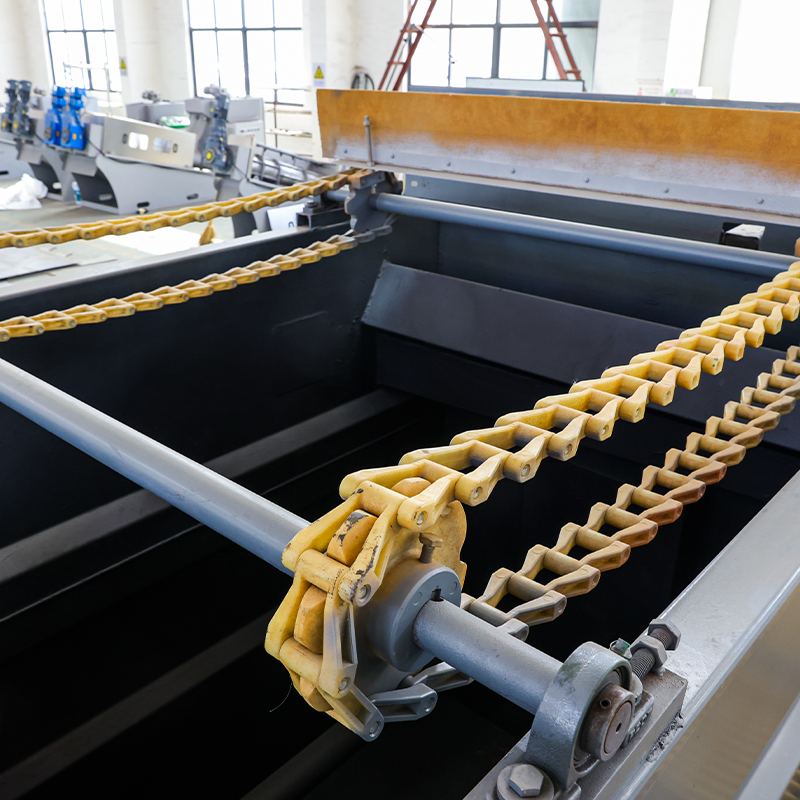 Dissolved Air Flotation Machine for Oil and Light Solids Removal This integrated, automated DAF unit floats off oils, fats and light solids that gravity settling cannot capture, protecting downstream biology from batch-load shocks in chemical, leather and food processing wastewater. View Product →
 Both routes depend on chemistry, so an automatic dosing device meters coagulant and polymer against the actual incoming load. For chemical, leather and food processing plants, DAF is usually the single unit that decides whether downstream biology stays stable or gets shocked by every batch discharge.
Secondary Biological Treatment: Oxygen and Surface Area Decide the Outcome
Biology delivers 85 to 95 percent BOD removal, but only when two physical conditions hold at the same time: enough dissolved oxygen and enough surface for biomass to colonise. Aerobic systems consume roughly 1.1 to 1.5 kg of oxygen for every kilogram of BOD they destroy, and microporous aerators supply that oxygen as fine bubbles; smaller bubbles mean more transfer surface per cubic metre of blown air, which shows up directly as lower blower energy per unit treated. Biofilm systems add the second condition: MBBR carriers give microorganisms protected surface area, so the tank absorbs load swings that would wash a plain activated sludge plant out.
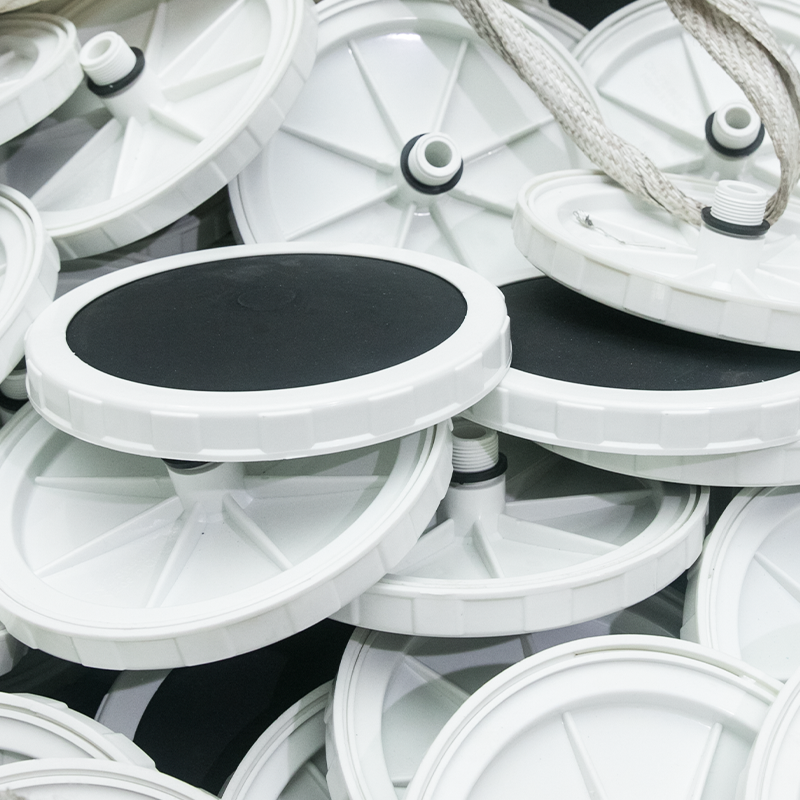 Microporous Aerator for Fine-Bubble Oxygen Transfer Diaphragm microporous aerators release small, evenly diffused bubbles that raise oxygen transfer efficiency, supplying the dissolved oxygen aerobic biology needs while cutting blower energy per unit of BOD treated. View Product →
 Sludge Handling: The Cost Line Most Plants Underestimate
Sludge is where treatment budgets quietly bleed. Scrapers pull solids off clarifier floors, DAF floats them off the top, and every one of those streams leaves the site as a haulage invoice measured in wet tonnes. The arithmetic is unforgiving.
For most industrial plants the press decision comes down to two designs:
- Cake at about 18 to 25 percent dry solids
- Open layout, easy for operators to watch and troubleshoot
- Needs continuous wash water and spray-nozzle upkeep
- Lower upfront cost, more routine maintenance hours
- Cake at about 20 to 30 percent dry solids
- Enclosed and slow running, with low wash-water demand
- Fewer moving wear parts and quieter operation
- Higher purchase price, lower daily attention
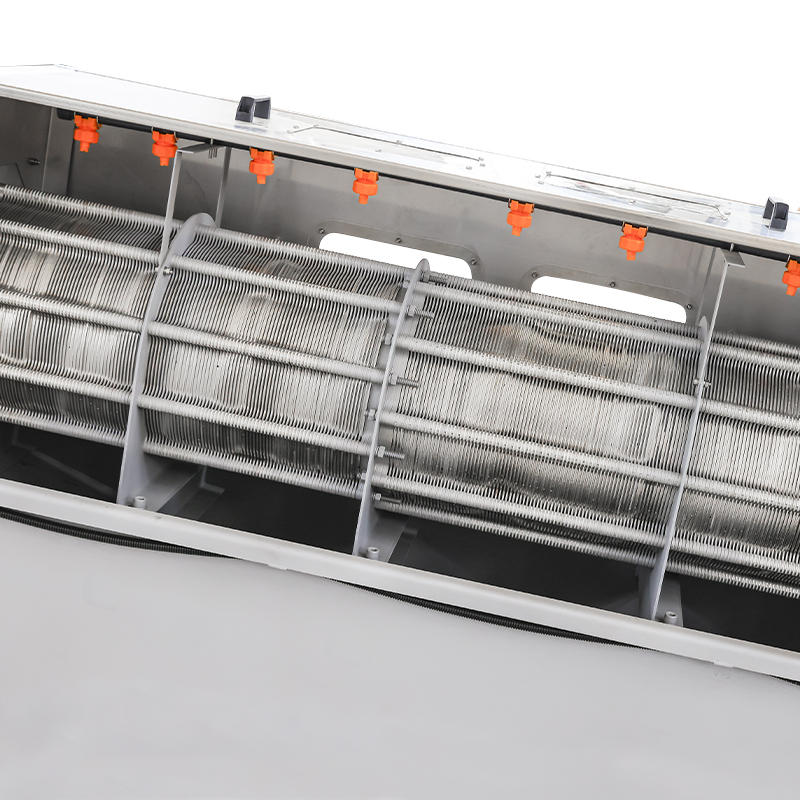 Screw Press Sludge Dewatering Machine With self-cleaning fixed and moving rings and a built-in pre-concentration device, this screw press dewaters flocculated sludge into a dischargeable cake, reducing the wet-tonne haulage costs that follow clarifiers and DAF units. View Product →
 Whichever press a plant specifies, skipping polymer conditioning guarantees neither machine will reach its cake numbers - the chemistry does the dewatering, and the press only squeezes what the chemistry has flocculated.
What the Removal Numbers Look Like Stage by Stage
Measured as cumulative BOD removal, the train tells a simple story: almost nothing happens at the headworks, primary clarification takes about a third, and biology does the heavy lifting. Four numbers frame the whole design conversation:
Two conclusions follow. First, value-engineering primary treatment out of a project to save capital cost overloads the biology and reappears as compliance drift within months. Second, tertiary filtration is what converts a merely compliant discharge into reusable process water for washing and cooling, which makes it worth pricing against the water bill, not just the permit.
Three Failure Patterns That Show Up in Every Audit
Most treatment failures are procurement decisions that surfaced months earlier. Three patterns repeat across chemical, leather, paper and textile plants:
- Undersized headworks. Screens and sand separators are the cheapest items on the quotation, so they get cut first, and the pumps, diffusers and flotation nozzles downstream pay for it in wear and unplanned downtime.
- Chemistry treated as an afterthought. Flotation and settling performance swings more on coagulant dose and pH control than on the machine itself; a plant without an automatic dosing device and a jar-test routine is guessing every shift.
- No sludge exit plan. Dewatering sized for average load stalls during batch discharges, and full storage bins either halt production or force premium-rate haulage of watery cake.
None of this is exotic, which is why experienced suppliers insist on a water analysis before quoting. When specifying replacement or expansion equipment, check what the after-sales support and spare parts commitment actually covers; Hengye, for instance, runs its delivery chain from design through manufacturing to installation and keeps a standing support channel for installed units.
Industrial Wastewater Treatment: Frequently Asked Questions
What is the difference between industrial and municipal wastewater treatment?
Municipal plants treat predictable domestic sewage. Industrial plants must handle effluent whose composition swings with production batches, so their trains add equalisation, pH correction and strong physicochemical stages such as DAF ahead of the biological step.
Which industries need a dedicated treatment train?
Chemical, leather, printing, plastics, paper, textile and food processing plants generate the classic difficult streams: oils, sulphides, chromium, dyes, fibres and high COD loads that municipal biology cannot absorb without dedicated pretreatment.
Can treated industrial wastewater be reused inside the plant?
Yes, and tertiary filtration is the enabler. Drum or micro filtration after biological treatment can polish effluent to a standard suitable for equipment washing and some cooling duties, cutting fresh water intake and discharge volume at the same time.
How do I choose between a belt filter press and a screw press?
Compare cake dryness against the attention budget. A belt press costs less upfront and is easy to observe and service; a screw press delivers drier cake, around 20 to 30 percent dry solids, with less wash water and fewer wear parts. Size either machine against peak sludge load, never the average.
Run as a designed pipeline - protect, separate, digest, polish, then dewater - industrial effluent stops being a quarterly compliance crisis and starts behaving like any other measurable process stream. Start from a proper water analysis, match one proven unit process to each stage, and hold every purchase to the numbers in this guide.
Mari Bekerja Sama dengan Yixing Hengye Perlindungan Lingkungan
Contact Us- Kategori Produk
- Mesin Pengurasan Lumpur
- Penyaring Rol
- Mesin Flotasi Udara Terlarut (DAF)
- Batang Mekanik Putar
- Perangkat Dosis
- Aerator
- Bahan Pengemasan Biologis
- Peralatan Pengolahan Air Limbah Lainnya
- Hubungi Kami
-
-
[email protected]

[email protected] -
+86-13812201185

-
+86-13812201185

-
No.20, Jalan Saite, Desa Gaoyao, Kota Gaocheng, Kota Yixing, Kota Wuxi, Provinsi Jiangsu, Tiongkok

-



